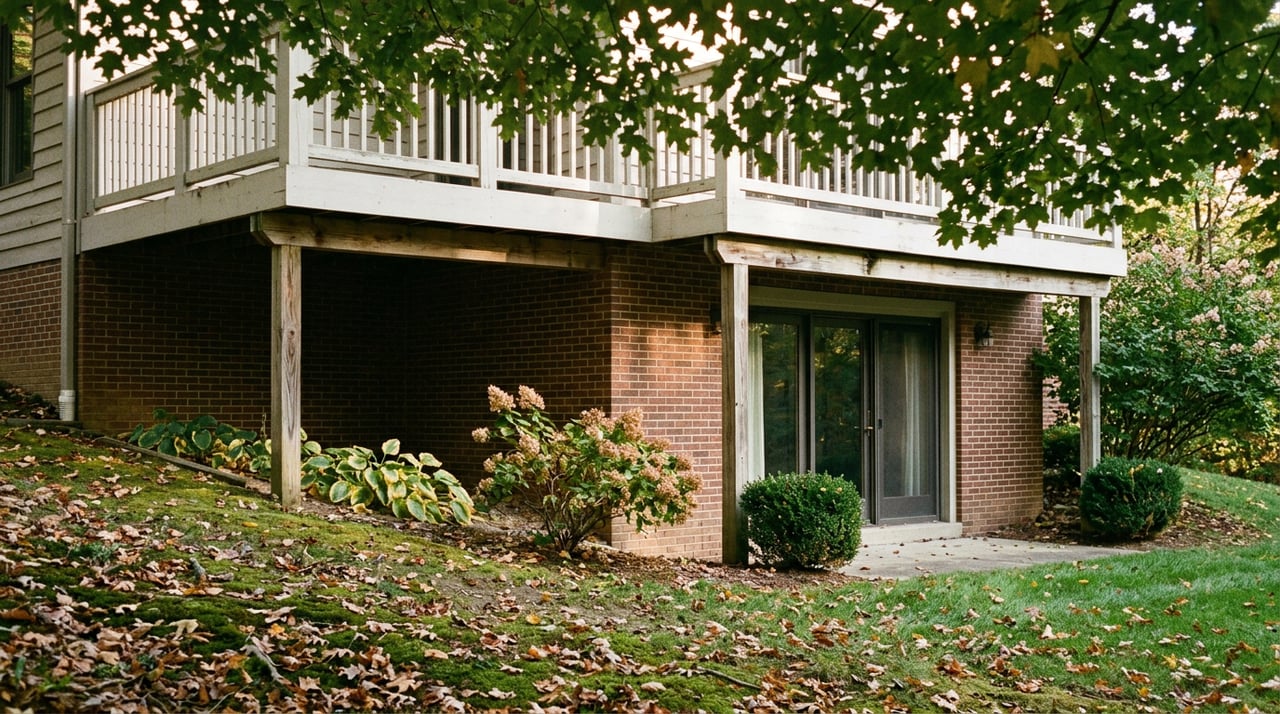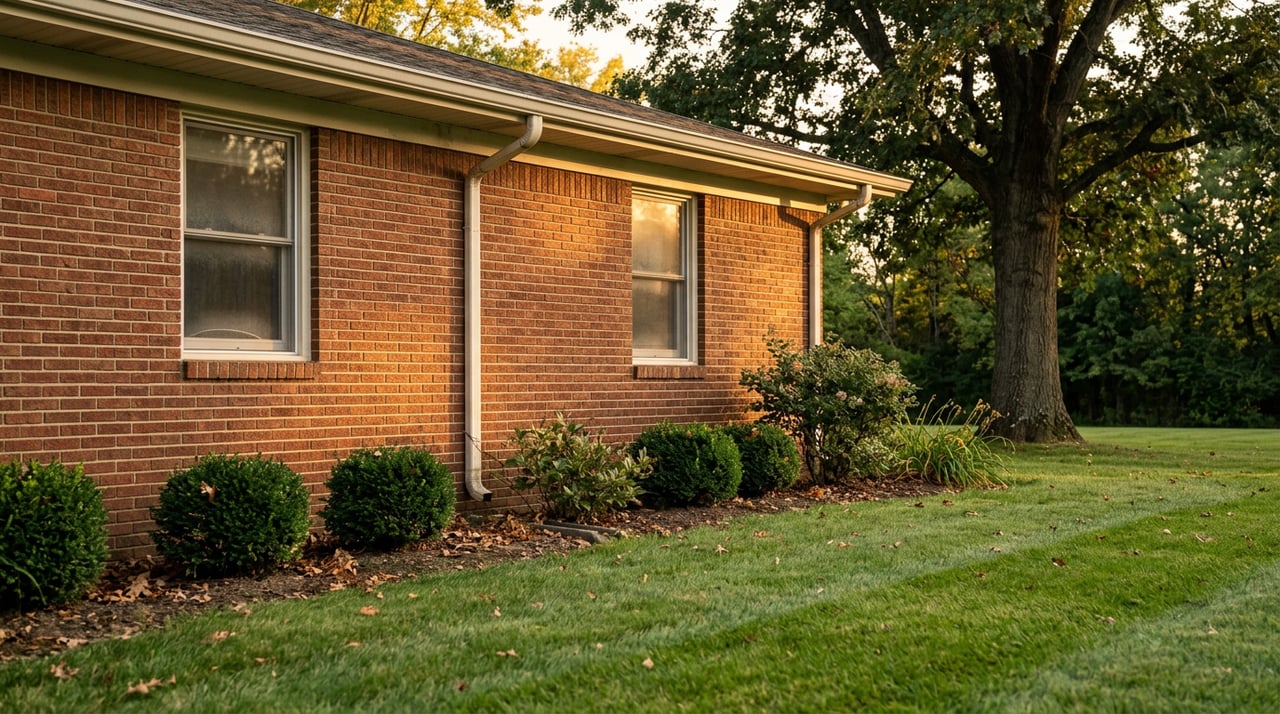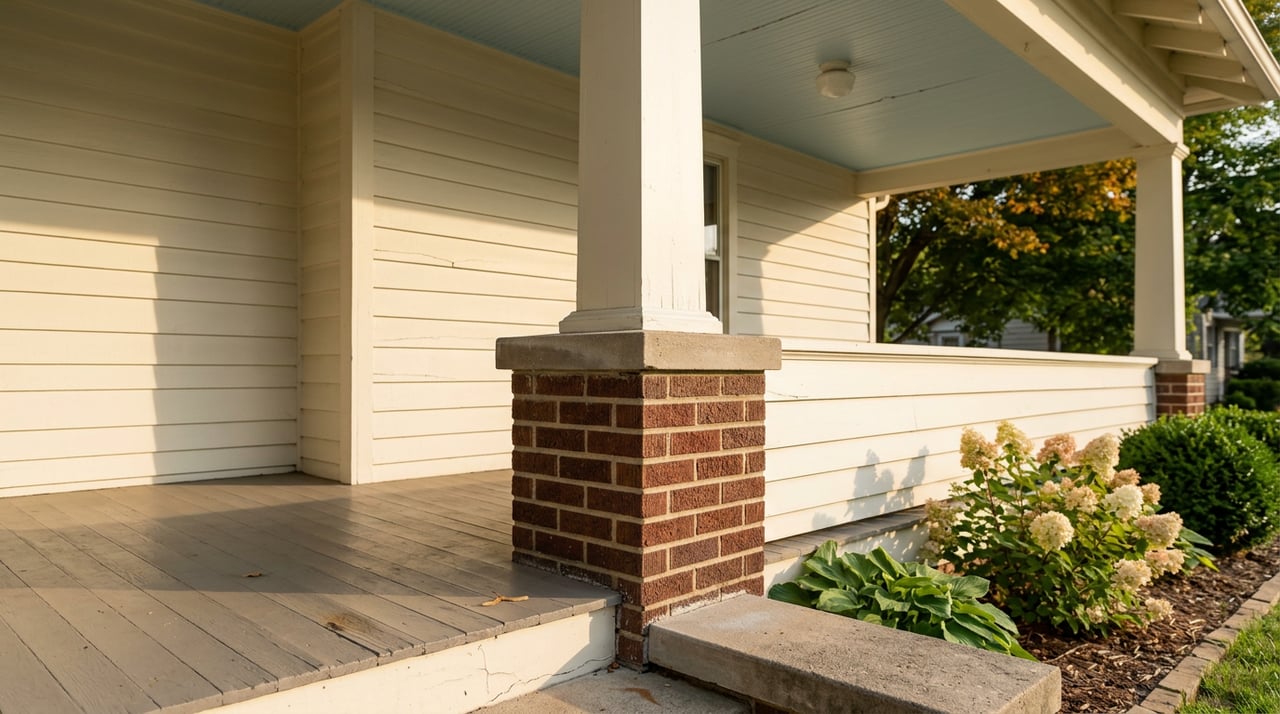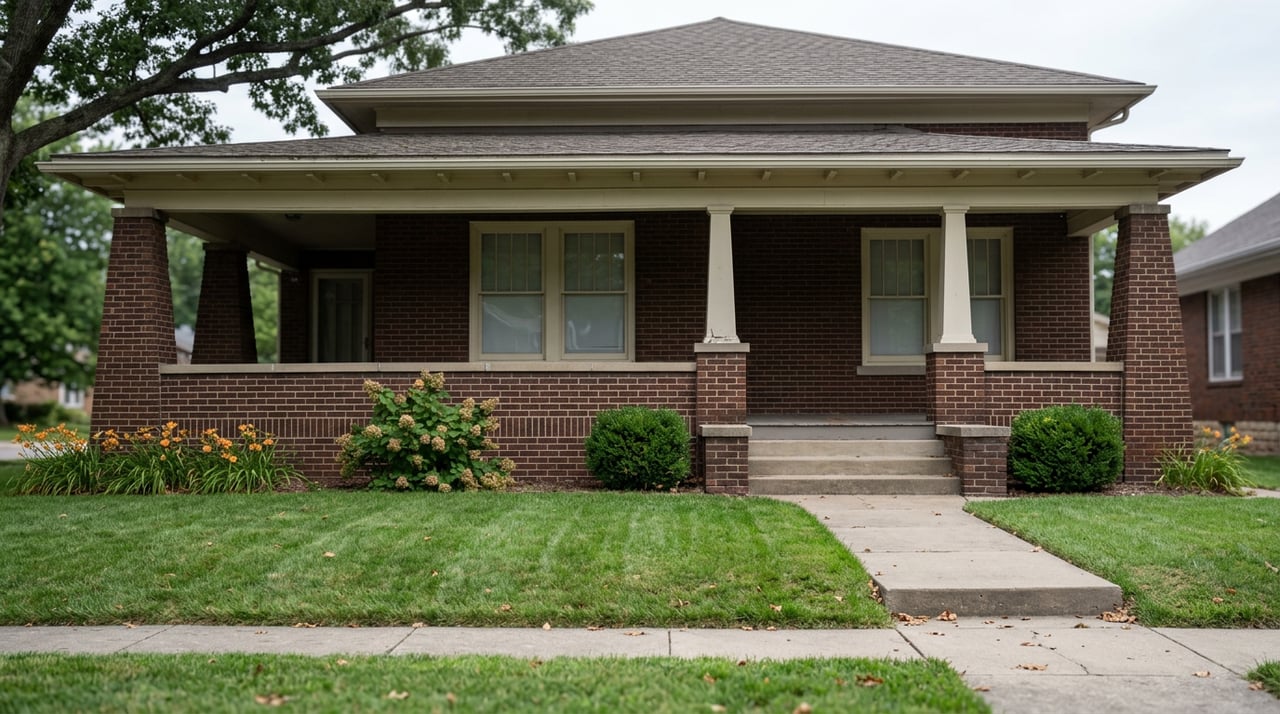
A homeowner on one of Carlinville's older residential streets gets ready to replace a failing roof or swap out drafty windows before listing the house, and someone mentions the words "historic district." The project stalls. Calls get made to find out who has to approve the color of the siding or whether vinyl replacement windows will get the house flagged. Weeks pass. Nobody at City Hall can actually answer the question, because in Carlinville, there is no board to ask.
That confusion is the most common piece of friction we see on residential streets inside the Carlinville Historic District, and it is built on a mistaken assumption. The district does not work the way most people think it does, and the gap between what people assume and what is actually true has real consequences for how a house gets renovated, listed, and sold.
What "Historic District" Actually Means Here
Carlinville's historic district has sat on the National Register of Historic Places since 1976. It covers a large swath of the city, roughly bounded by Oak Street, Mulberry Street, Morgan Street, and the eastern city limits, which means it includes far more than the courthouse square. Large residential sections fall inside that boundary, full of the Victorian homes, brick cottages, and bungalows that give the older part of town its character.
Here is the part that surprises most owners: National Register listing, on its own, does not restrict what you can do to your house. It is an honorific designation. Alterations, paint colors, replacement windows, and additions on a National Register property are only regulated if federal funds are involved in the project, or if the local government has adopted its own preservation ordinance with a review commission to enforce it.
Carlinville has not done that. The Illinois State Historic Preservation Office maintains a list of the state's Certified Local Governments, the municipalities and counties that have adopted a preservation ordinance and stood up a commission with the authority to review exterior work. Carlinville is not on it. That means there is no local body with the power to approve or deny a new roof, new siding, or a repainted porch on a residential street inside the district boundary.
The Landmarks Everyone Names Are the Exception
When people talk about "historic Carlinville," they usually mean the standouts: the 1876 "Million Dollar" courthouse, the Loomis House (St. George Hotel) on the square, St. Paul's Episcopal Church on South Broad, the Federated Church on East Second South, and the old city jail known locally as "The Calaboose" on North Plum Street. These sites carry individual significance and get treated as the face of the district in tourism materials and local histories.
But the district's boundary sweeps in hundreds of ordinary homes on ordinary streets that get none of that individual attention and none of the oversight people assume comes with it. A house two blocks off the square, listed as a contributing structure simply because it was standing in 1976 and fits the district's architectural pattern, has the same lack of local regulation as a house outside the boundary entirely.
What Buyers and Sellers Usually Assume, Versus What's True
| Assumption | What's Actually True in Carlinville |
|---|---|
| A local preservation board reviews exterior changes | No such board exists; Carlinville has no historic preservation ordinance or Certified Local Government status |
| Replacing historic windows requires approval | No approval is required unless federal funding is part of the project |
| Being "in the district" limits resale value or use | National Register status alone places no use or resale restrictions on the property |
| There's no financial upside to the designation | Contributing properties can qualify for a state property tax incentive most owners never apply for |
That last row is where the real opportunity sits, and it is the part almost nobody in town takes advantage of.
The Incentive Nobody Applies For
Illinois runs a Property Tax Assessment Freeze for owner-occupants of certified historic residences, administered by the State Historic Preservation Office at no cost to the homeowner. A house that qualifies, either through individual National Register listing or as a contributing property inside a listed district like Carlinville's, can have its assessed value frozen for eight years after a substantial rehabilitation, followed by a four-year step-up period before the assessment returns to current market level. That's twelve years where a major renovation does not translate into a higher tax bill.
To qualify, the rehabilitation has to meet or exceed 25 percent of the assessor's fair cash value of the property, house and land combined, spent within a 24-month window. That threshold trips people up in a specific way: it is calculated against fair cash value, the number the assessor uses to estimate what the home would sell for, not against the lower assessed value that actually appears on the tax bill. A house with a fair cash value of $120,000 needs roughly $30,000 in qualifying work to clear the bar, using round numbers to illustrate the math. Homeowners who calculate the threshold against their assessed value instead routinely underbudget and fall short.
Eligible expenses cover more than people expect: new roofs, tuckpointing, historic window repair, wood refinishing, electrical and mechanical upgrades, kitchen and bath improvements including appliances, architectural fees, and even wall-to-wall carpet and window treatments. The work also has to meet the Secretary of the Interior's Standards for Rehabilitation, and the state reviews it directly. That review is separate from and unrelated to any local landmarks process, since Carlinville has none.
Selling Before the Rehab Is Finished
The freeze only applies to an owner-occupied principal residence, which matters for how a sale gets structured. If you finish a qualifying rehab and then sell, the freeze does not automatically transfer to the buyer. It cancels, and the new owner would need to apply fresh if they intend to occupy the home themselves.
There is a workaround that matters for anyone rehabbing a Carlinville historic home with an eventual sale in mind. A person or contractor can get state approval on the first two parts of the application before doing the work, complete the rehabilitation, then sell the property with the completed but unsigned final paperwork. If the buyer moves in as their principal residence and submits that last form, they receive the twelve-year freeze starting from their purchase. For a renovated house on one of the district's residential streets, documented eligibility for that freeze is a concrete, disclosable detail worth putting in front of a buyer, not a footnote.
What to Check Before You Assume Either Way
A few things are worth confirming directly rather than taking on a neighbor's word, since the gap between assumption and fact runs in both directions here:
- Confirm your property is a contributing structure in the National Register district. The Illinois SHPO's National Register staff can verify this by phone for any address outside Chicago.
- Pull your fair cash value from your property tax bill or the Macoupin County Assessor's office before budgeting a rehab against the 25 percent threshold.
- Contact the State Historic Preservation Office before starting work if you intend to apply for the freeze. Work done before approval is done at your own risk, and the office recommends submitting the first two application parts before construction begins.
- If you are selling a home mid-rehabilitation or mid-freeze, disclose the freeze status plainly. It does not carry over automatically, and a buyer who assumes it does will be surprised at their first tax bill.
A Few Direct Questions
Does the lack of local restrictions mean I can do anything to the exterior? For day-to-day maintenance and renovation, yes, nothing in Carlinville's own code regulates it. But if you want the tax freeze, the state will review the work against the Secretary of the Interior's Standards regardless of what the city does or doesn't require.
Can a commercial building on the square use this program? The freeze is built for owner-occupied residential use: single-family homes, condominiums, cooperatives, or buildings with up to six units where the owner lives in one. A purely commercial property on the square would not qualify.
What if I already finished the rehab before I knew this existed? You have a window. Applications must be submitted within 24 months of your last qualifying expenditure, so a recent rehab may still be eligible even if you never contacted the state during construction.
If you're weighing a renovation before listing a historic Carlinville home, or you're looking at a fixer-upper inside the district and wondering what you're actually allowed to do with it, this is exactly the kind of local detail worth getting right before you make an offer or set a price. Land & Home Real Estate works these streets regularly and can walk through what applies to your specific address. Request a Property Valuation and we'll factor in what the district designation actually means for your home, not what everyone assumes it means.